WWII & The Japanese Occupation: A Dark Chapter
Chronicling the fall of Singapore and the hardships of life under occupation.
The prosperity and confidence of colonial Singapore shattered in a matter of days. What had taken over a century to build—the mighty fortress, the thriving port, the myth of British invincibility—crumbled before a swift and devastating assault that would forever change how Singaporeans saw themselves and their place in the world.
The Fall of Fortress Singapore
By 1941, Singapore had grown complacent behind its reputation as the "Gibraltar of the East." Massive naval guns pointed seaward, defending against attacks that military planners assumed would come from the sea. The island bristled with defenses, home to what seemed an impregnable British stronghold in the Far East.
The Japanese had different plans. On December 8, 1941, just hours after Pearl Harbor, Japanese forces began their lightning advance down the Malayan Peninsula. Instead of a costly naval assault, they chose the unexpected route—bicycles and light tanks racing through jungle paths, outflanking British defensive positions designed for a different kind of war.
The campaign that military experts had predicted would take months was over in weeks. British, Australian, and Indian forces, trained for European-style warfare, found themselves outmaneuvered by an enemy that understood the terrain and fought with devastating efficiency. On February 8, 1942, Japanese troops crossed the Johor Strait and landed on Singapore's supposedly impregnable northern shore.
Within a week, the unthinkable had happened. On February 15, 1942, Lieutenant-General Arthur Percival surrendered Singapore and its 80,000 defenders to the Japanese forces. The ceremony, conducted in the Ford Factory in Bukit Timah, marked not just a military defeat but the end of an era. The colonial power that had seemed invincible was humbled before the eyes of its subjects.

Syonan-to: Light of the South
The Japanese renamed Singapore "Syonan-to"—Light of the South—casting it as the southern beacon of their Greater East Asia Co-Prosperity Sphere. But for the island's inhabitants, the new name masked a harsh reality of occupation, repression, and terror.
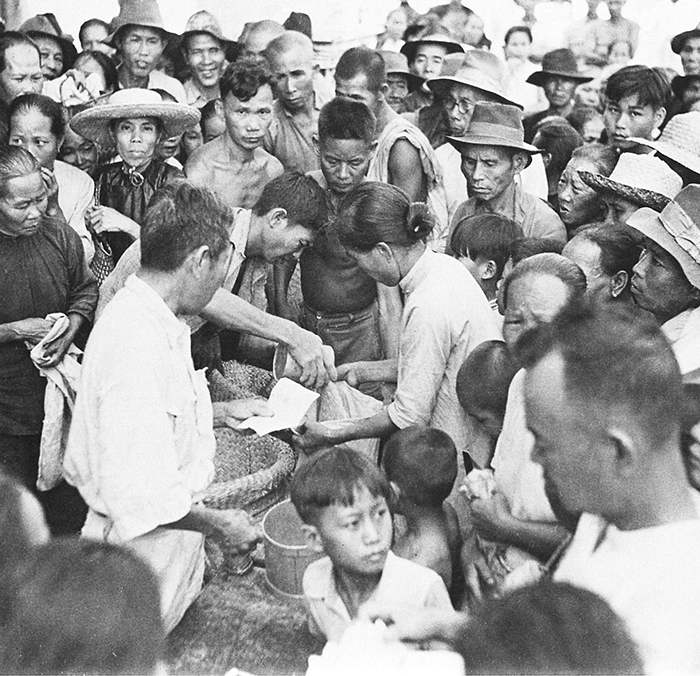
The Japanese military administration imposed strict control over every aspect of daily life. Food became scarce as the efficient colonial supply networks collapsed. Residents queued for hours for meager rations of rice, tapioca, and sweet potatoes. Many turned to growing vegetables in their gardens or trading precious possessions for food on the black market.
Currency became worthless overnight as Japanese military scrip replaced the Straits dollar, triggering devastating inflation. Families that had lived comfortably under British rule found themselves struggling for basic survival. The cosmopolitan trading hub that had thrived on diversity and openness became a place of suspicion, surveillance, and fear.
The Sook Ching Horror
The occupation's darkest chapter began just days after the surrender. Between February 18 and March 4, 1942, Japanese forces conducted the Sook Ching ("purification through suffering") operation—a systematic attempt to eliminate potential resistance among Singapore's Chinese population.
Chinese males between 18 and 50 were ordered to report to registration centers across the island. What followed was a brutal screening process where thousands were arbitrarily selected for execution. Teachers, businessmen, community leaders, and random civilians were transported to remote beaches and killing sites around the island.
The beaches of Changi, Punggol, and Sentosa—places that would later become symbols of leisure and tourism—became sites of mass murder. Families never learned the fate of fathers, sons, and brothers who simply never returned from registration. Conservative estimates put the death toll between 5,000 and 25,000, though the true number remains unknown.
This systematic brutality left deep scars in Singapore's collective memory, particularly within the Chinese community. The arbitrary nature of the killings created a climate of terror that lasted throughout the occupation.
Survival and Resistance
Despite the horror, life continued. Singaporeans adapted with remarkable resilience, developing survival strategies that would become part of the island's collective memory. Children learned Japanese in school while secretly maintaining their cultural identities at home. Black markets flourished as resourceful traders found ways to circumvent official restrictions.
Small acts of resistance punctuated daily life—listening to hidden radios for Allied news, protecting neighbors from Japanese patrols, maintaining community bonds despite official policies designed to divide racial groups. These quiet forms of defiance preserved the social fabric that would prove essential for post-war reconstruction.
Liberation and Awakening
On September 12, 1945, British forces returned to Singapore, ending three and a half years of occupation. Lord Louis Mountbatten accepted the Japanese surrender in the same room where Percival had capitulated, symbolically restoring Allied authority.
Yet Singapore's people had been fundamentally transformed. The myth of European superiority lay in ruins, shattered by the swift Japanese victory and the occupation's harsh realities. A new political consciousness was emerging—one that questioned colonial authority and imagined different futures for the island and its people.
The war's end marked not just liberation, but awakening. Singapore would never again be content with its role as a passive colonial outpost.