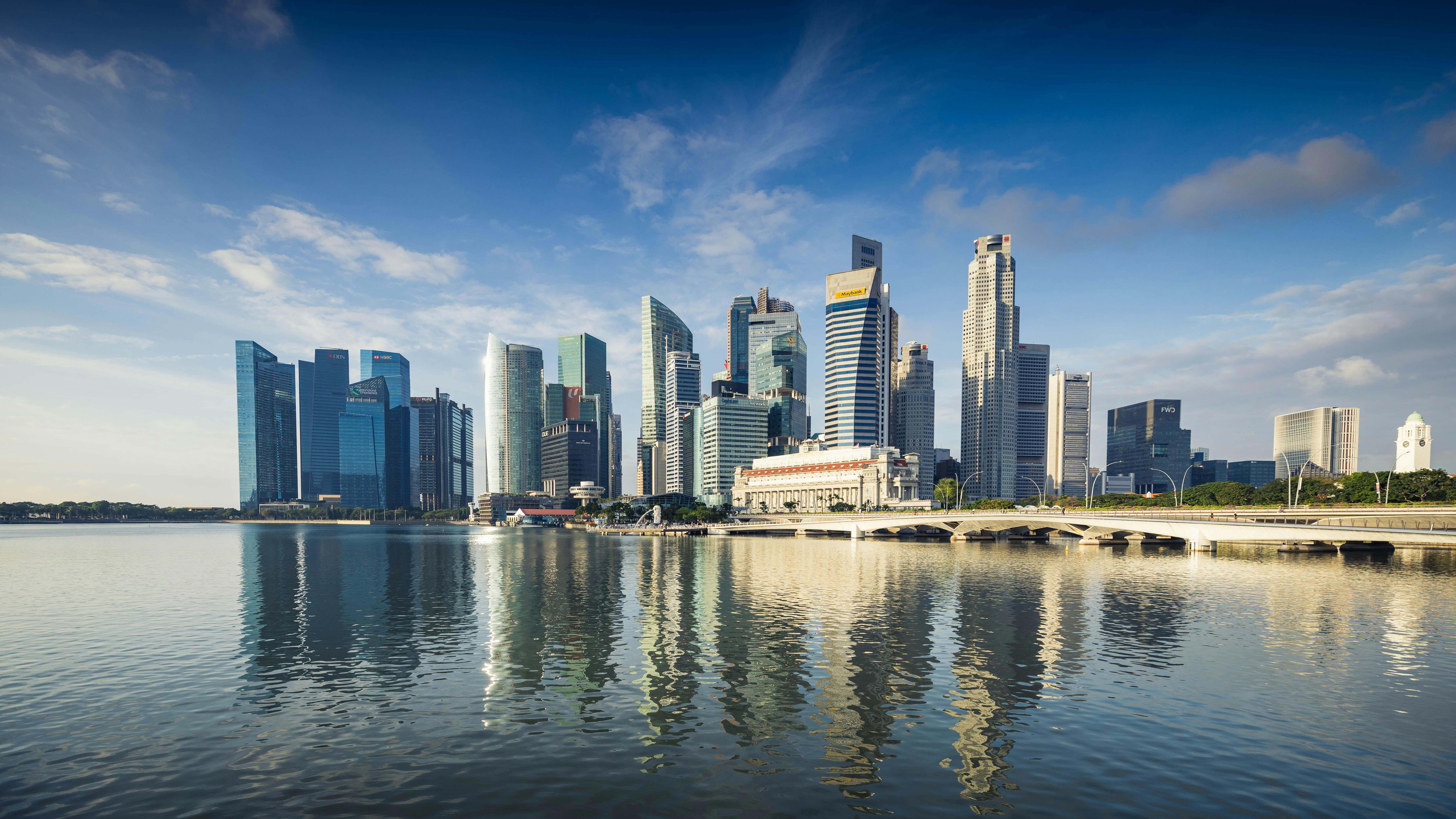
Modern Metropolis: From Survival to Success
Charting Singapore's extraordinary transformation into a global powerhouse.
The tears of independence day in 1965 quickly gave way to steely determination. Singapore's leaders faced a stark reality: their island nation had no natural resources, hostile neighbors, and a population of less than two million. What seemed like insurmountable challenges would become the foundation for one of history's most remarkable national transformations.
The Survival Strategy
Lee Kuan Yew's government understood that Singapore's survival depended on making itself indispensable to the world. With no hinterland to fall back on, the island would have to become so efficient, so clean, so reliable that global businesses would choose Singapore despite its size and youth.
The strategy was audacious in its simplicity: attract foreign investment by creating conditions found nowhere else in Southeast Asia. While neighboring countries struggled with corruption, red tape, and political instability, Singapore would offer clean government, efficient bureaucracy, and predictable policies. The island would become a haven of competence in a region known for chaos.
Multinational corporations responded enthusiastically. By the 1970s, American, European, and Japanese firms were establishing regional headquarters in Singapore, drawn by its strategic location, English-speaking workforce, and business-friendly policies. What had once been an entrepôt for traditional Asian trade became the nerve center for modern global commerce.
Building the Foundation
Economic strategy alone couldn't create a nation. Singapore's leaders understood they needed to build social cohesion among the diverse communities that called the island home. The Housing Development Board (HDB) launched the world's most ambitious public housing program, eventually housing over 80% of the population in modern apartments that mixed all ethnic groups.
The education system was completely overhauled, emphasizing meritocracy over privilege, English as the working language while preserving mother tongues, and technical skills alongside academic achievement. By the 1980s, Singapore's students were outperforming their peers worldwide, creating the skilled workforce that multinational corporations demanded.
National service created shared experiences across ethnic lines, while strict laws against racial and religious provocations prevented the communal tensions that had torn the Malaysian federation apart. The government's message was clear: Singapore's diversity was its strength, but only if managed carefully and deliberately.
The Economic Miracle
The results exceeded everyone's expectations. Singapore's GDP per capita, which lagged behind many developing countries in 1965, surpassed that of its former colonial master, Britain, by the 1990s. The port became the world's busiest, processing more cargo than any other city. Changi Airport emerged as the global gold standard for aviation excellence.
Manufacturing evolved from simple assembly to high-tech production. Singapore became a center for petrochemicals, electronics, and precision engineering. When the digital revolution arrived, the island was ready—fiber optic cables, educated workforce, and stable institutions made it the natural hub for the internet age in Asia.
Financial services flourished as Singapore positioned itself as the Switzerland of Asia—neutral, stable, and discreet. Banks, insurance companies, and investment funds established regional operations, managing trillions of dollars from their Singapore offices.


21st Century Leadership
The new millennium brought fresh challenges and opportunities. Singapore embraced biotechnology, clean energy, and digital innovation with characteristic determination. The city-state that had once struggled for basic survival now led global rankings in competitiveness, ease of doing business, and quality of life.
Infrastructure projects defied conventional wisdom about small city-states. Marina Bay Sands transformed the skyline and tourism industry. The Mass Rapid Transit system became a model for urban transportation worldwide. Gardens by the Bay merged nature with technology in ways that captured global imagination.
Yet success brought new complexities. The aging population, income inequality, and the constant pressure to innovate in an increasingly competitive world created challenges unknown to the nation-builders of 1965. The foreign workforce that had fueled growth now triggered debates about national identity and social cohesion.
Continuing Evolution
Today's Singapore bears little resemblance to the struggling city-state of 1965, yet the fundamental principles remain unchanged: pragmatism over ideology, merit over privilege, long-term thinking over short-term gains. The small island that once feared for its survival now ranks among the world's most prosperous societies.
The journey from Temasek to modern Singapore—from medieval trading post through colonial entrepôt to global city-state—demonstrates that geography is not destiny. Vision, determination, and the willingness to adapt can transform even the smallest nation into a giant of the modern world.
Singapore's story continues to unfold, each generation building upon the foundations laid by those who transformed tears of independence into the bedrock of extraordinary success.
The Survival Strategy
Building the Foundation
The Economic Miracle